Provides comprehensive coverage of aircraft instruments and indication systems, including pitot-static instruments, gyroscopic instruments, air data systems, engine instruments, warning and alert systems, flight directors, autopilot interfaces and the interpretation of instrument indications in normal and abnormal operations.
€24.99
Instand PDF Download
Start right away.
Unlimited Access
Learn at your pace.
Secure Payment
Encrypted & trusted.
Constantly updated
Always up to date.
01 - What's Included
CONTENT OVERVIEW
Provide a precise understanding of aircraft instruments, sensors, display systems, warning systems, and automated control interfaces used to monitor and control aircraft operation.
Core Syllabus Areas
Sensors and engine instruments, including pressure, temperature, fuel quantity, tachometer, thrust, torque, vibration, and time-measurement instruments.
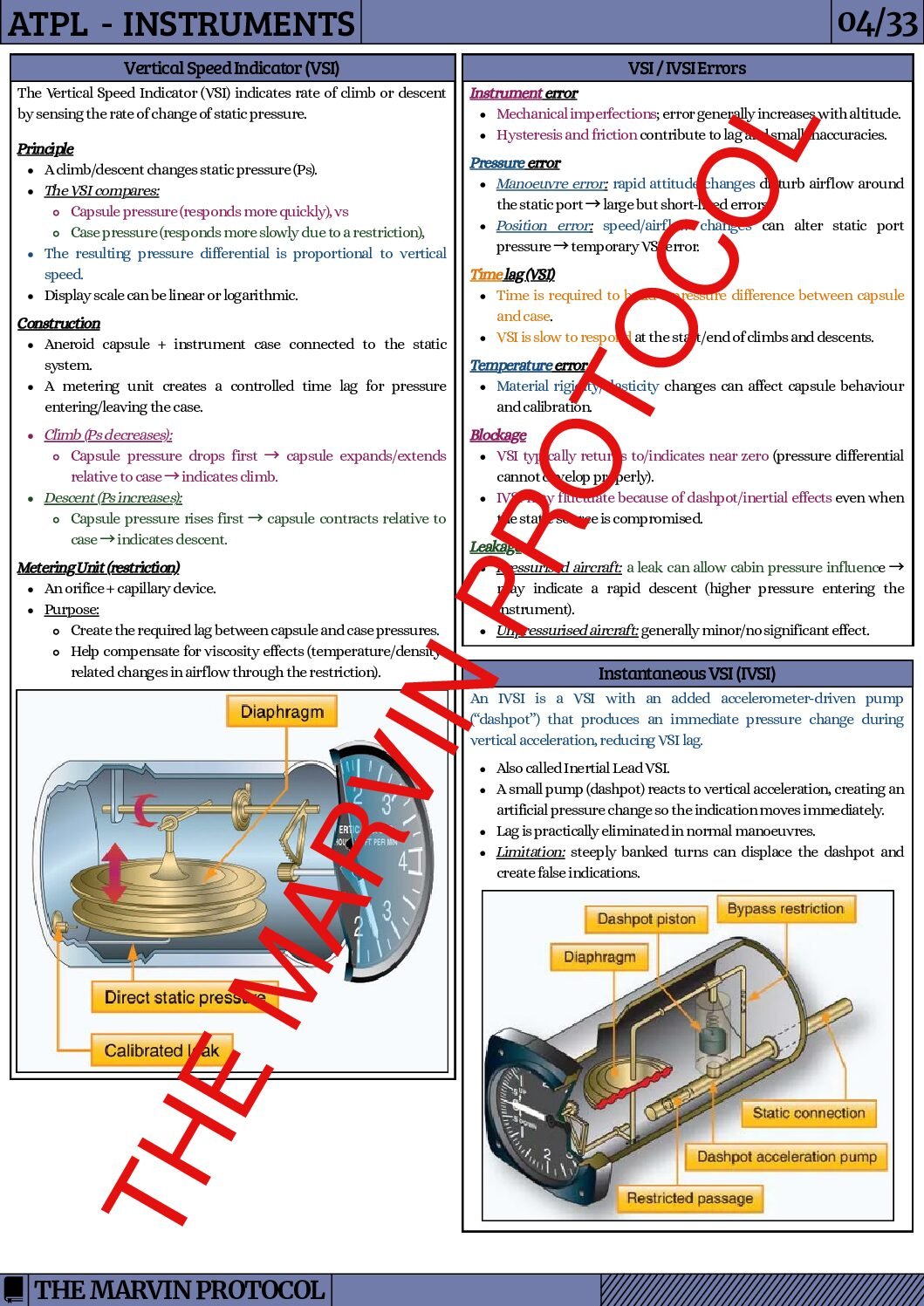
Air-data measurement, including pressure, temperature, angle of attack, altitude, vertical speed, airspeed, Mach number, and air-data computer functions.
Magnetism, direct-reading compass systems, and flux-valve principles.
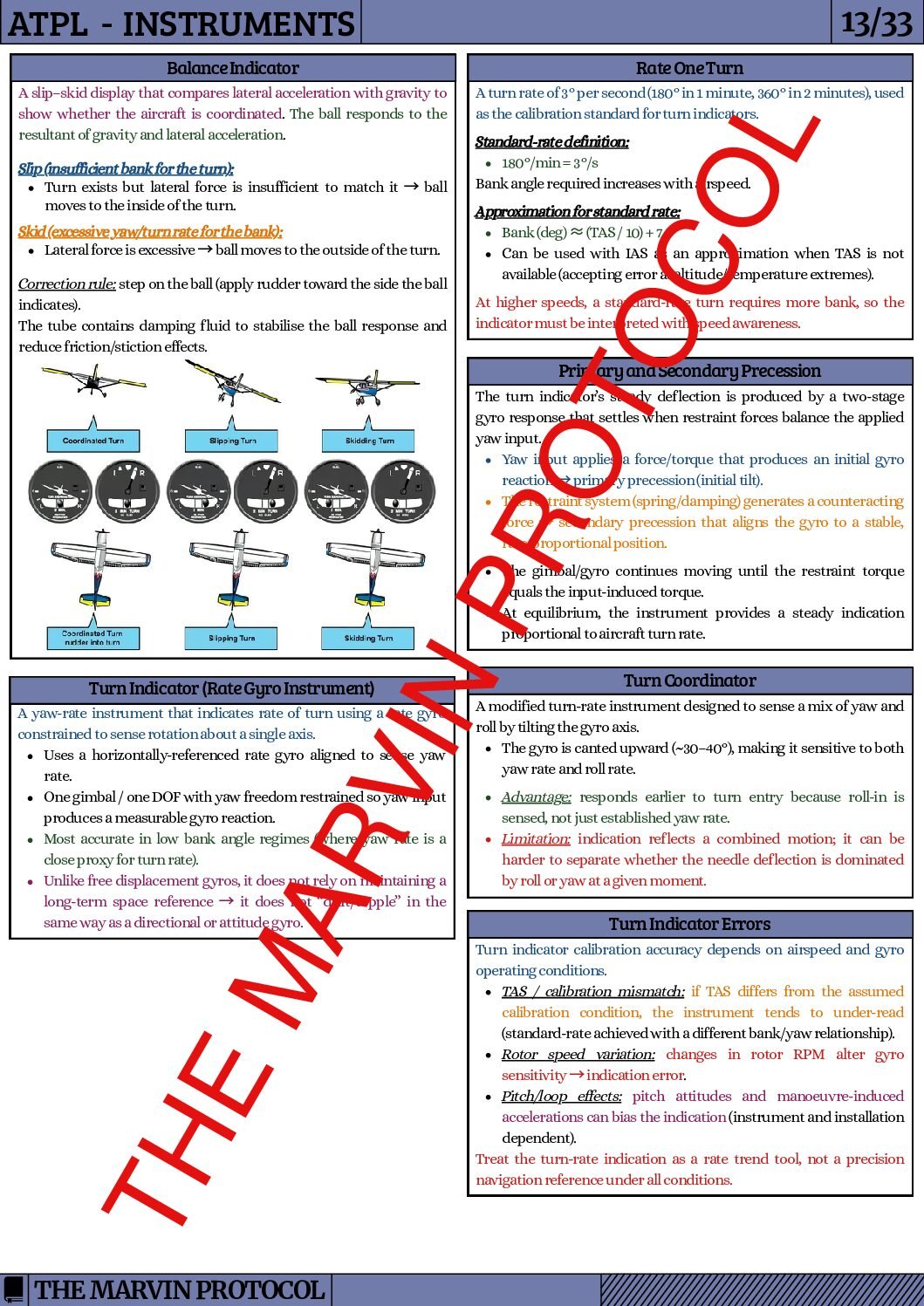
Gyroscopic instruments, including attitude, heading, and associated reference systems.
Inertial navigation and inertial reference systems.
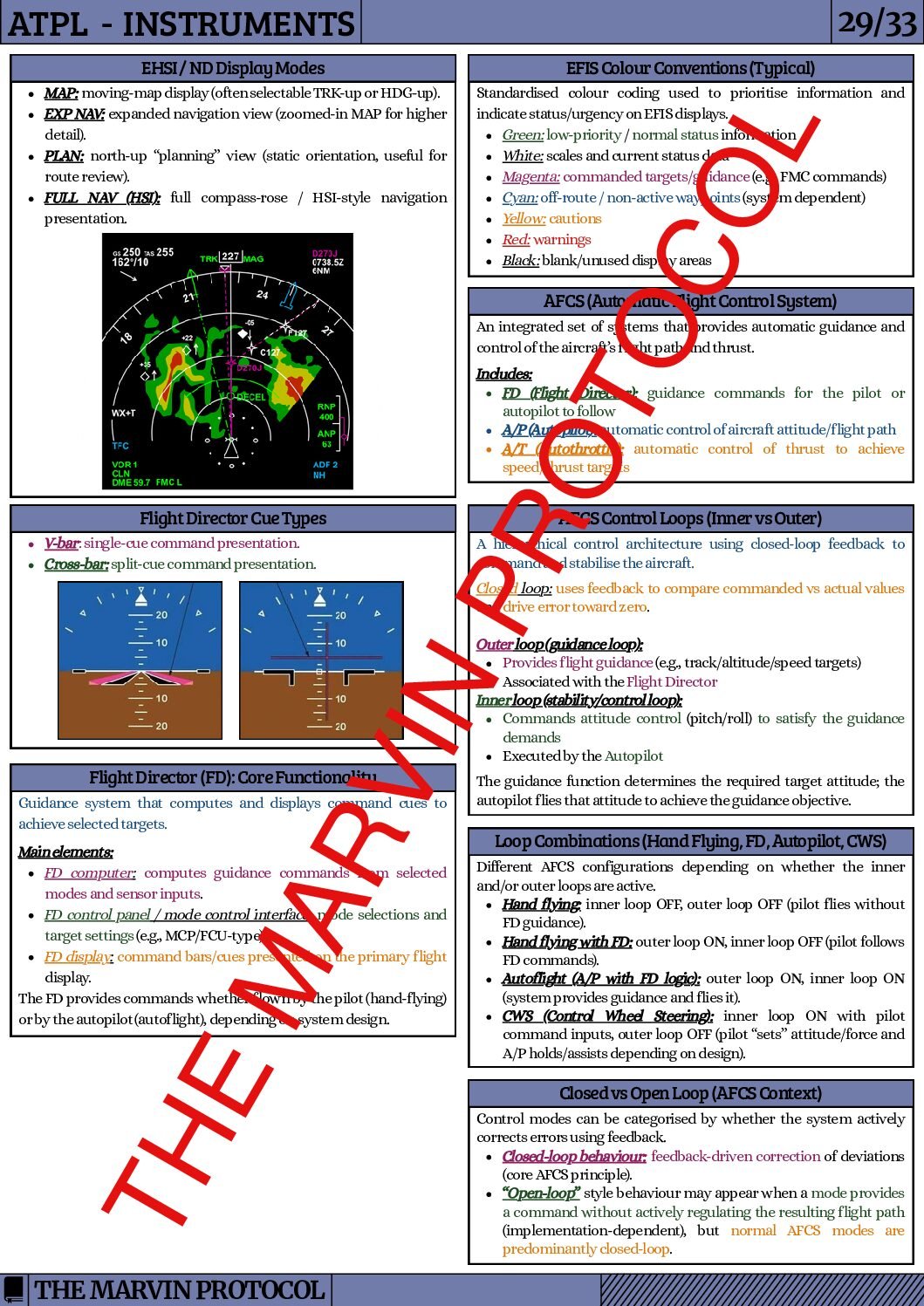
Automatic control systems, including autopilot, flight director, AFCS modes, and mode awareness.
Trim systems, yaw dampers, and flight-envelope protection logic.
Automatic thrust control or auto-throttle systems.
Communication system fundamentals relevant to cockpit instrumentation.
Alerting and proximity systems, including stall warning, stall protection, take-off warning, altitude alerting, radio altimeter, and ground-proximity concepts.
Integrated instruments and electronic displays, including glass cockpit logic and display integration.
Monitoring, recording, digital circuitry, and computer-based system architecture.
Key Competencies
Interpret analogue and electronic cockpit indications accurately.
Understand how sensors convert physical parameters into usable cockpit information.
Identify likely instrument or system failure modes and their operational consequences.
Understand automation modes, annunciations, and pilot-monitoring requirements.
Maintain situational awareness in highly integrated and automated flight decks.
After completing your purchase, you will receive an email containing access or download information. Your purchased resources will also be available in your account library.
No. Digital resources are licensed for individual use only. Sharing, reproducing, distributing or making them available to another person is strictly prohibited.
Digital resources may include personalised and technical protection measures designed to identify unauthorised distribution and protect intellectual property.





![History of Aviation MCQ [English Version]](https://themarvinprotocol.com/wp-content/uploads/2026/03/History-of-Aviation-MCQ-English-Version-1.png)